
















 Radio
Radio

.jpg "Get Timeform ratings for every upcoming runner and past result, plus premium winner-finders including commentary, Flags, Pace Maps and lots more.")


 Url copied to clipboard.

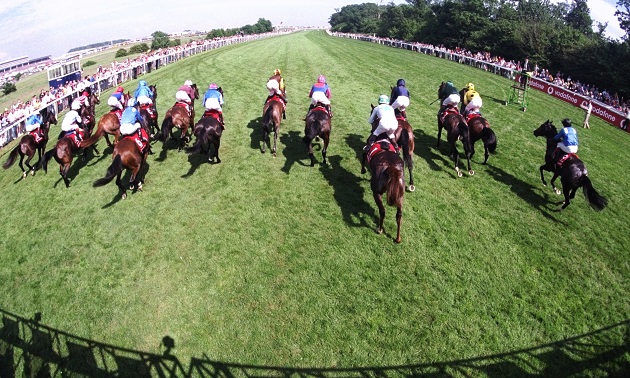
Derby favourite English King has eased to 11/4 (from 5/2) after it was revealed that he will have to break from stall 1 at Epsom on Saturday.
Low draws are considered a disadvantage over a mile and a half at Epsom, with Oath, victorious in 1999, the last of three horses to have won from stall 1. However, finding an approach that considers how all runners fared, rather than simply the winner, provides a better guide as to the impact of the draw.
The below graph highlights how many runners over the Derby course and distance - of a mile and a half at Epsom - since 2015 have run to form.
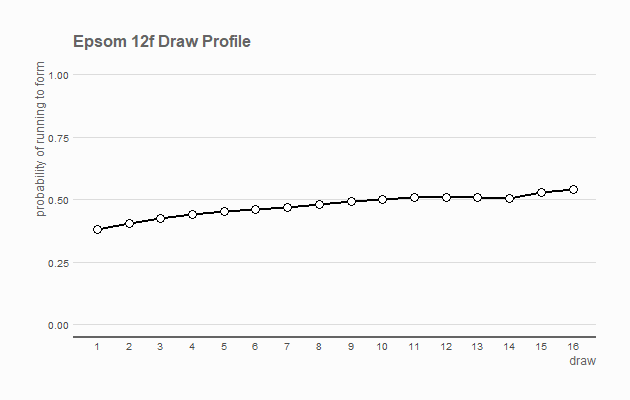
Only 38% of horses (from a sample size of 65) breaking from stall 1 ran to form. Other low draws also fared poorly, with only 40% of horses running to form from stall 2 – the gate from which Mogul, the mount of Ryan Moore, will break.
There is a smaller sample size covering the higher stalls – each race will have a horse breaking from stall 1 but there will not always be one in stall 16 – but the available data shows that horses drawn high have tended to run to form more frequently than those drawn low.
This isn’t to say that low draws cannot win. There are a host of other important factors to consider, such as latent talent, stamina and ability to handle the course, but the data suggests there is merit in the view that a low draw is more of a hindrance than a help.
Also read:
Rowleyfile preview: Investec Handicap
Epsom aces: the highest-rated Derby winners
Simon Rowlands: what the sectionals tell us about three famous Derby results
Investec Oaks: Pedigree analysis
Investec Derby: Pedigree analysis
.jpg&w=300)
.jpg&w=300)
.jpg&w=300)
.jpg&w=300)
.jpg&w=300)


