
















 Radio
Radio

.jpg "Get Timeform ratings for every upcoming runner and past result, plus premium winner-finders including commentary, Flags, Pace Maps and lots more.")


 Url copied to clipboard.

The year 2016 will go into the history books for a multitude of reasons, including political turmoil, the deaths of numerous popular public figures and the rise of so-called “post-truth”. In horseracing, it will be remembered rather more fondly, not least for the exploits of the brilliant racehorse Thistlecrack.
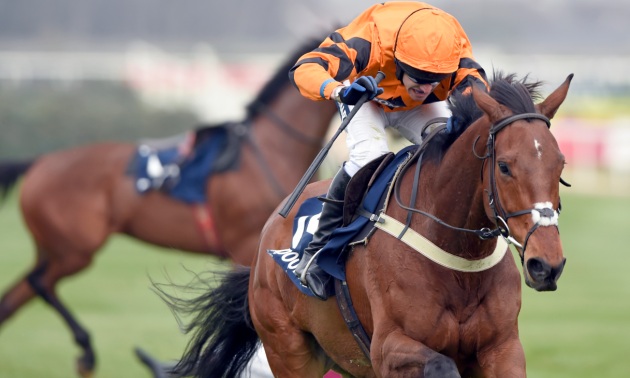
Thistlecrack has won all seven of his starts in the calendar year, moving seamlessly from Master of the Staying Hurdle Universe, via hugely exciting novice chaser, to impressive winner of the premier staying chase of the mid-winter, the King George VI Chase.
If you want purple prose which describes that latest win, achieved on Boxing Day at Kempton Park, then you will not have far to look, for there is plenty of it about. Winning such a race on just your fourth start over larger obstacles is a massive achievement: doing so with ease, even more so.
But analysts should not be so easily seduced by the thrill of the spectacle and the sense of history. “Truth” can be a subjective matter, but facts and evidence much less so. If we introduce certain evidence into the appraisal of Thistlecrack’s performance they suggest that some people have got a bit carried away.
One of the characteristics of this year’s King George is that it attracted a notably small field of just five runners, a testament not only to Thistlecrack’s huge reputation but to the proven exploits of his stable-companion, Cue Card, winner of the race 12 months earlier. Small field, or not, the race promised to be gripping and did not disappoint.
But one consequence of a smaller field is an increased possibility that a significant proportion of the principals will fail to run their races. There is good reason to think that was the case here.
Cue Card was comprehensively beaten by three and a quarter lengths in second but was just a fraction ahead of Silviniaco Conti and Tea For Two, horses rated more than 20 lb behind him by Timeform in recent starts. 162-rated Josses Hill seemed not to stay in finishing last of five.
More to the point for this timing-based blog, however, is the fact that this year’s King George was run in nothing like a fast time, either overall or sectionally (bar at one specific juncture), as can be seen by a one-on-one comparison with the Kauto Star Novices’ Chase, run at the same course and distance 70 minutes earlier. These are the cumulative times for the leaders of the two races.

The leader in the King George was behind the leader in the Kauto Star from an early stage, but not by a lot (1.0s is roughly equivalent to five lengths). Thistlecrack put the race to bed by running several lengths quicker than “par” on the home turn, but thereafter the King George runners were being left behind again by the leader in the Kauto Star, until that leader – Might Bite – fell when well clear at the final obstacle.
Had Might Bite stood up, he would have run his race at least 2.5s quicker than did Thistlecrack, despite the pair being level on the home turn. As it is, the final-time difference of 1.1s in favour of Thistlecrack over Royal Vacation equates to about 8 lb once weight carried is allowed for, and that is much less than might be expected given the abilities involved.
There is little doubt that Thistlecrack could have run quicker – possibly much quicker – had it been necessary, but that does not apply to the same degree to the horses he beat.
This observer will need a great deal of convincing that Silviniaco Conti and Tea For Two ran much above their recent figures in the mid-150s. This was an admirable effort from Thistlecrack, but let us not get post-truth about what he was beating or how fast he was running. Let us be “picky”, as a post-truther might put it.
There also remains a strong possibility that Might Bite is a really good novice. He was about 3.9s ahead of Royal Vacation when coming down and could easily be a 160-plus performer.
These were not the only noteworthy time performances on what was a splendid day’s racing at the West London track. In particular, Yanworth won the Christmas Hurdle in a time 4.7s quicker than did the useful novice hurdler Elgin in winning the opener. The headline figures give a fuller picture.

Par finishing speeds on the hurdles course at Kempton are around 104%, as can be deduced from the extensive information to be found in Timeform’s unique Sectional Archive.
It took a well-run race for Yanworth to get on top, but given such he can indeed be considered to be a high-class hurdler at two miles, despite scepticism (including from me) about this previously. Sectionals suggest The New One paid slightly for doing plenty up front, but not enough to cost him the race.
Those headline figures make for interesting comparisons with those for the following day.

In particular, look at how much quicker those chase finishes were in absolute terms than the King George VI Chase had been, including in the useful handicap chase at the same trip that wound up proceedings.
The races won by Altior and by Special Tiara were at two miles, of course, and a similar exercise in one-on-one comparison is worth performing for them.

The runners in the seniors’ race were ahead from the outset, but, having gone around 15 lengths up, it was the novices’ – or, more specifically, the facile winner Altior – who were running faster thereafter.
This was a good but not quite stellar performance on the clock for a novice by Altior. But, believe it or not, he had run outrageously fast when annihilating one rival on this course on his chasing debut (something which seems to have been lost on most observers).
That smart Special Tiara time also reflects well on the runner-up in his race, Sir Valentino, who was conceding him 6 lb and was beaten just half a length, though sectionals suggest the result was the right way round.
Kempton may have been centre stage, but it was a close-run thing with Leopardstown across the two days. It is worth looking at Monday’s and Tuesday’s results at the latter track in unison. Contrary to some reports, there was not much between the speeds of the surfaces on the two days, though the chase course was clearly quicker than the hurdle one.

The time performance of Leopardstown’s St Stephen’s Day card was that of Min in the Racing Post Novices' Chase, which was much quicker both overall and sectionally than the fairly useful handicap which followed it.
However, that was overshadowed by the copybook display by Douvan the following day in winning the Paddy Power Cashcard Chase at the same distance.
Almost effortless from start to finish, Douvan forged clear of Sizing John and Simply Ned in the closing stages. That time, and that sectional (2.0s slower than in Min’s race), shows that this was a good test, and that it was yet another top-drawer performance from the brilliant six-year-old.
The other two notable time-based winning performances across the two days at Leopardstown came from Bapaume on the Monday and Saturnas on the Tuesday.
The former’s race was a rarity among juvenile hurdles in being strongly-run, which should be a good preparation for the Triumph Hurdle at Cheltenham in March. The latter was not quite so attritional, but it still proved too much for some well-touted types and prompted further improvement from the promising winner.
Saturnas’ race was one of four at two miles over hurdles on that second day, but was easily fastest and yet by no means slow sectionally, either.
The above has barely scratched the surface of the bigger races that have taken place so far over the festive period, and for the full story you will need to head to the Timeform Sectional Archive. There, you will also find much of the sectional evidence you need to make sense of some of the lesser contests that have taken place in that time.
Slow finishes were a feature at Fontwell on Boxing Day. Café Au Lait (in particular) and Kingston Mimosa did too much too soon in the opener and can be rated ahead of and level with the winner Sober Sailor respectively. Or, that’s what the evidence of the sectionals suggest, anyway.

.jpg&w=300)
.jpg&w=300)
.jpg&w=300)
.jpg&w=300)


