
















 Radio
Radio

.jpg "Get Timeform ratings for every upcoming runner and past result, plus premium winner-finders including commentary, Flags, Pace Maps and lots more.")


 Url copied to clipboard.

A sign of the high esteem in which Yorkshire folk hold themselves, and believe they should be held by others, was conveyed by the local television news item this week trumpeting the fact that “God’s Own County” would lie in fourteenth place in the Rio 2016 medal table if it was an independent country and not just far and away the best part of one.
You do not have to go to the other side of the world to see Yorkshire sporting prowess in action, of course, and the county can put on a show as well as walk off with prizes.
“Putting on a show” has been very much the case with this week’s Yorkshire Ebor Festival, at which top-class racing has featured on every day of a high-class occasion at a world-class racecourse. It does not get much better, even though those local winners have, in truth, been a little thin on the ground.
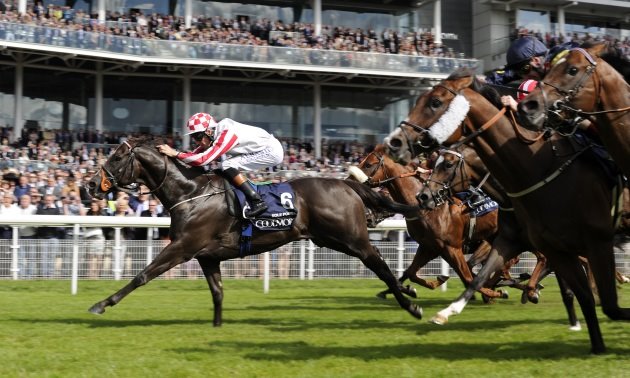
Friday’s big-race winner, Mecca’s Angel, is about as Yorkshire as it is possible to be without actually being Yorkshire. She is trained just a few miles across the border in County Durham and has now won four races in her adopted county, including the last two runnings of the Group 1 Coolmore Nunthorpe Stakes on the Knavesmire. She is most certainly Northern, anyway, and that will do.
More to the point, she is probably just about the best 5f turf horse anywhere in the world just now. If you don’t believe that, then look at the evidence of the clock, which shows that Mecca’s Angel was just 0.08s (about half a length) off breaking the brilliant Dayjur’s track record set in this race way back in 1990.
She did it emphatically, and in similar style to 12 months earlier, tracking a strong pace and clearing off impressively at the business end, as the sectionals for the race show:

Mecca’s Angel’s finishing speed (her closing speed as a % of her average speed for the race overall) at 102.1% is very close to par for the course and distance. Five-furlong races may seem like straightforward “point and shoot” affairs, but a slow opening furlong – or an overly fast one – affects overall times and efficient energy distribution more than occasionally.
Those sectional upgrades – derived from the difference between that par finishing speed % and the actual finishing speed % recorded by each runner – suggest no excuses for the beaten horses, either, though this year’s Nunthorpe was perhaps not quite as simple as that.
What is not shown is that the horses drawn 13 and higher might have been disadvantaged, in part because they got slightly behind early (TurfTrax sectionals have them about a length and a half on average behind their lower-drawn rivals after a furlong). It is also possible that Take Cover did well to dispute the lead and to come again for third from stall 12.
Whatever her rivals were, or were not, doing, Mecca’s Angel ran fast but efficiently from start to finish and it took her to that impressively fast time.
It must be said, however, that even a mare of her great quality should not be able to run such a time if the going really was “good”, as it was changed to officially from “good to firm” early in the card following rain.
Some of the other times were indicative of quick conditions, too: Nemoralia’s win was just 0.33s outside the shorter-lived 7f course record, while Arcanada’s time in the finale was good for a mile race with 8 yards added as a result of rail movement.
How those other times, and sectionals, stack up are as follows:

Those finishing speeds are for the race overall in this instance, taking the time for the leader passing the sectional to the leader (that is, the winner) crossing the line, and they convey whether a race overall was well-run or not.
They confirm that the Lonsdale Cup was a tactical affair, with the winner, Quest For More, getting a fine ride from the front from George Baker. However, while the Roger Charlton-trained six-year-old was allowed a lot of rope, he did draw clear again late on and the individual sectionals (which may be found in the Timeform Sectional Archive) do not definitely indicate that something else should have beaten him.
Finishing speed %s also point to the races won by Nemoralia and by Arcanada being truly-run, though Librisa Breeze ended up too far out of his ground in the former and can be rated second-best in it. And they show that the opener won by Barsanti was actually run at a pace slightly stronger than ideal (the first three all came from early positions towards the rear).
Barsanti is a smart performer who should make an impression in Group company (he ran off a BHA mark of 105 here, which few horses are good enough to win from), but fourth-placed Stars Over The Sea paid for racing in the front rank and was squeezed out for good measure. The Mark Johnston-trained gelding should be going close next time.
Johnston is an adopted Yorkshireman, of course, and certainly exhibits some of the characteristics of one. William Haggas claims to be one, too, though his accent appears to be more Richmond, Surrey, than Richmond, Yorkshire.
Either way, he “struck a blow for the locals” when Rivet, who he trains in Newmarket, landed some good bets in the Convivial Maiden. That race’s finishing speed of 103.1% shows that this was more of a test of speed than of stamina, if not greatly so. In that respect, the winner did well to come through from mid-division to score by three and a quarter lengths having taken a while to settle.
Haggas usually has a few good ones in the yard, and Rivet could be another. As he might be tempted to say “aye up, that’s reet grand”, or, more probably, “I say, that is jolly good”.

.jpg&w=300)
.jpg&w=300)
.jpg&w=300)
.jpg&w=300)


